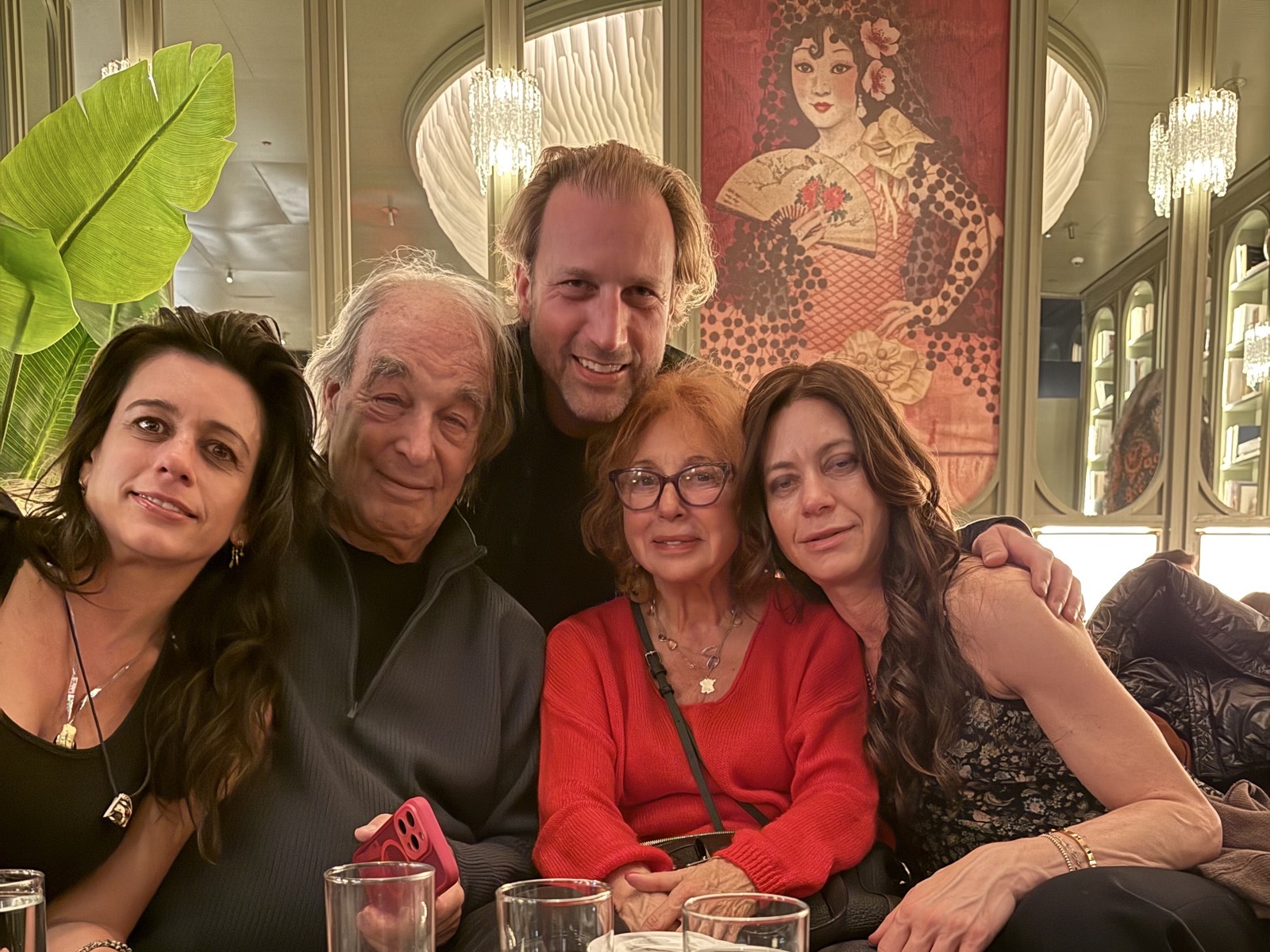
We’re in the car, all six of us, and nobody has decided where we’re eating.
My father is calling out his three favorite places, in order, with reasons. My mother is bracing against the door and reacting to every turn I take. My sisters are announcing at intervals that they are hungry, which is true and which helps nothing. And my grandfather, from somewhere in the back, is explaining that he has been driving for a hundred years and would have handled that last light differently.
I’m at the wheel. Everyone is talking. The car is moving the entire time.
I’ve thought about that car more in the decades since than I ever expected to, because it turns out to be an exact description of what it feels like to start a business.
Tell people you’re building something and see what happens. Inside of a week you’ll have been told what to call it, who your customer actually is, what to charge, whether you should raise, why the name won’t work, and which large company is going to crush you. Most of these people have never seen the product. All of them are certain. Everyone has an opinion about what your business is and how you should be running it, and the opinions arrive a lot faster than the business does.
The car is still moving while they talk. That’s the part people forget.

Five voices
Once you start listening for it, the advice sorts into the same handful of voices every time. I’ve started naming them, because naming a thing makes it easier to hear it coming.
The Navigator. Three confident recommendations, each specific, each defensible, all pointing in different directions. My father, with his restaurants. The Navigator isn’t wrong. He’s answering a question about his own preferences and handing you the answer as if it were about yours.
The Phantom Brake. The passenger pressing a pedal that isn’t there. Reacting not to your destination but to your risk — the sharp turn, the close merge, the thing you didn’t see. This voice is genuinely useful, because it’s the only one paying attention to whether you’re about to hit something. It is not, however, navigation. Confusing the two will keep you in the right lane doing forty for a year.
The Hunger. Urgency with no direction attached. They don’t know where to go, they only know they’re uncomfortable now. Every company has investors, customers, or cofounders in this seat at some point, and the instinct it triggers is to solve the discomfort instead of the problem. Those are rarely the same move.
The Odometer. A hundred years of driving. Real authority, hard-won, on a road that no longer exists. The tricky part is that this voice is often right, and the times it isn’t are exactly the times that matter most, and you cannot tell which is which from the tone. Certainty sounds identical whether or not the map is current.
And there’s a fifth now, which I couldn’t have written a few years ago.
The Atlas. It never gets tired, never hedges, and answers any question instantly in complete paragraphs. I use it constantly. I’m building with it. It’s genuinely useful. It is also, structurally, the most confident voice in the car, and it has never driven anywhere. It’s a synthesis of what a thousand other people did on a thousand other roads. Which is precisely what my father was doing with his three restaurants, only faster and with better grammar.
One difference is worth naming, because it cuts the other way from how it feels. The first four got in the car uninvited. This one you summon. It speaks only when spoken to, which reads as control and isn’t, because you decide how often to ask and the asking costs nothing. Nobody has ever consulted their grandfather forty times before lunch. You are still the driver with the Atlas in the car. You are just a driver who now has an infinitely patient passenger, and no natural limit on how often you turn to it.
The mistake isn’t listening
I want to be careful here, because “ignore the advice” is bad advice.
Collect all of it. Your job as a founder is to gather more information than anyone else in the room and then decide. The gathering isn’t optional. Running a company on your instincts alone is how you end up confidently wrong for eighteen months with nobody willing to tell you.
The mistake is a different one. It’s outsourcing the decision to the loudest or the most credentialed voice in the car and then telling yourself you were being open-minded.
Most advice is autobiography. People tell you what worked for them, in a different vehicle, on a different road, at a different hour, with different passengers. The advice is honest and the conditions don’t transfer. Take it literally and you’re not learning from their experience, you’re re-running their conditions inside yours and hoping.
There’s a compounding version that’s worse. If you take a little from each voice, you don’t get consensus. You get mush. Four coherent strategies averaged together produce one incoherent product, and you’ll spend a year trying to work out why nothing lands.
You are the driver. Your hands are on the wheel. Only your foot controls the brake and the accelerator.
That isn’t a line about confidence. It’s a description of where the responsibility actually sits. Nobody else in the car will be held accountable for where you end up, and most of them will have forgotten what they said by the time it matters.
First, I try to scare you
So here’s what I actually do when someone tells me they want to start something.
I try to talk them out of it.
Not because I want them to stop. Because a lot of people are in love with the idea of owning a successful business, which is a completely different thing from wanting to run one. The allure is real and it is mostly marketing. So I describe the grind in more detail than anyone wants: the stretch where you are simultaneously the product, the support desk, and the collections department. The months where the work is unglamorous and nobody is watching. The number of conversations that end in no. The fact that the exciting part is maybe five percent of the calendar.
Then I tell them what the coverage leaves out. Every overnight success you have ever read about was two years in the making, or ten. You get the announcement and never the decade. The story is structured to skip precisely the part I’m describing, which is why so many people arrive believing that part doesn’t exist.
If that lands and they’re still leaning in, that tells me something no pitch deck will. Conviction is the only fuel that survives the boring middle, and it’s better to find out now than eleven months in.
If it scares them off, that was worth knowing too, and it cost them nothing.
Cast wide, including the absurd
Say none of that scared you off. You’re still in the driver’s seat, the car is still moving, and everyone is still talking. So what do you actually do with all of it?
You take it. Every piece. Including the feedback you’re certain is wrong, and especially the feedback that stings — learning to receive it without defending is a skill, and a rarer one than it should be.
I’ve been handed genuinely absurd ideas. Ideas I could see the flaw in before the sentence finished. I take them anyway, because ideation is a wide umbrella by design. You cast the net wide first. Some of the best directions I’ve taken arrived attached to something that was mostly wrong, and I would have missed the good quarter of it if I’d cut the person off at the point where I knew better.
Volume is the price of coverage. It’s tremendous noise. That’s fine. Noise is the raw material.
Then dial it in
Here’s the actual skill, and I think it’s the one that separates founders who make it from founders who don’t: finding the signal in that noise.
Not gathering. Gathering is table stakes and everybody does it now. The talent is discrimination — knowing which of the forty things you heard this month is the one thing that changes the plan, and having the discipline to let the other thirty-nine go without a second meeting.
Then you distill. All of that input has to compress down into one concept you can say in a sentence, and the compression is where most of it dies. That’s correct. It should die.
And then the step that actually settles it: you validate. Product-market fit is the only judge whose opinion is binding, and it isn’t in the car — it’s out there, in the market, waiting to be asked properly. That’s a whole subject of its own and I’ll write it separately. But I don’t want to leave it out here, because every argument above about opinions ends in the same place. The market breaks the tie. Nobody in your family does.
You will make bad calls
You will. That’s not the end of anything. It’s the only way the information gets generated.
What matters is what you do the day after. Stay agile, stay nimble, adapt fast. Against an established competitor that is your actual superpower, and founders consistently undervalue it because it doesn’t feel like an advantage — it feels like not having resources.
Never underestimate being under the radar. And once you’re on the radar, once a big company knows exactly what you are and decides to respond, remember what it takes to turn an aircraft carrier. They have to convene, align, budget, and reorganize before they can move. You can change direction between a Tuesday and a Wednesday. That gap is the whole opportunity, and it closes the moment you start behaving like them.
In praise of naïveté
One more, and it took me a long time to arrive at it.
I’ve come to see naïveté as a compliment.
The word reaches us through French from the Latin nativus — native, inborn, natural. Not ignorant. Unlearned in the literal sense: you haven’t yet been taught what isn’t possible.
Experienced, senior, credentialed people will tell you that you can’t do that. Sometimes they’re protecting you. Sometimes they’re describing a constraint that was real on their road and quietly expired. Either way, “you can’t do that” is two things at once: motivation, and a fairly precise map of where the opportunity is. If it were obviously doable, someone with more resources would already have done it.
The young founder who doesn’t know it’s impossible has a real structural advantage over the veteran who does. That advantage has an expiry date. Spend it.
In 1772 Joseph Priestley wrote to Benjamin Franklin asking for advice on a decision. Franklin refused to give it. He said he couldn’t tell him what to determine, only how. Then he explained why hard decisions are hard, and it isn’t what you’d expect: the reasons for and against are never present to the mind at the same time. One set shows up, then another, and the first is out of sight. That’s what makes you waver.
The car is the opposite condition and somehow the same problem. Every reason is present at once, in five voices, at volume. Franklin had to write his down over three or four days to get them into one view. I had to get them into one view while merging. Either way the work is identical: assemble the whole thing in front of you, then decide. Deciding is the scarce skill, and it gets scarcer as the supply of opinions goes to infinity.
So, congratulations
If you’re starting something: congratulations, and I mean it. It will feel overwhelming, because you’re in territory nobody in the car has actually been to.
Keep gathering. Listen to the person bracing at the turns, they’re watching for something real. Let the hungry ones be hungry a few more minutes. Take the absurd suggestion seriously for thirty seconds before you set it down.
Then pick the restaurant.
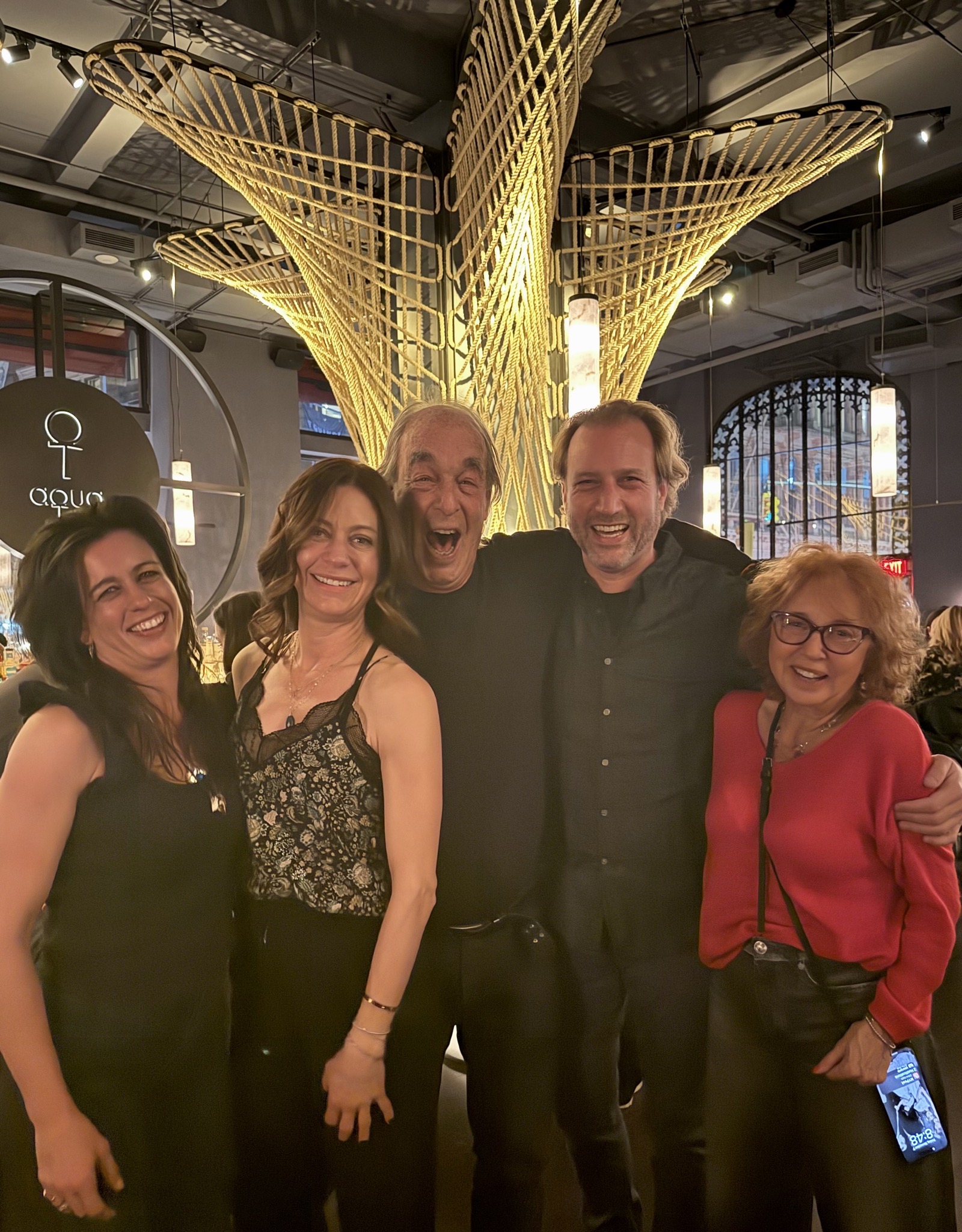
In memory of Gramps, who isn’t in any of these photographs. He was in the car.